
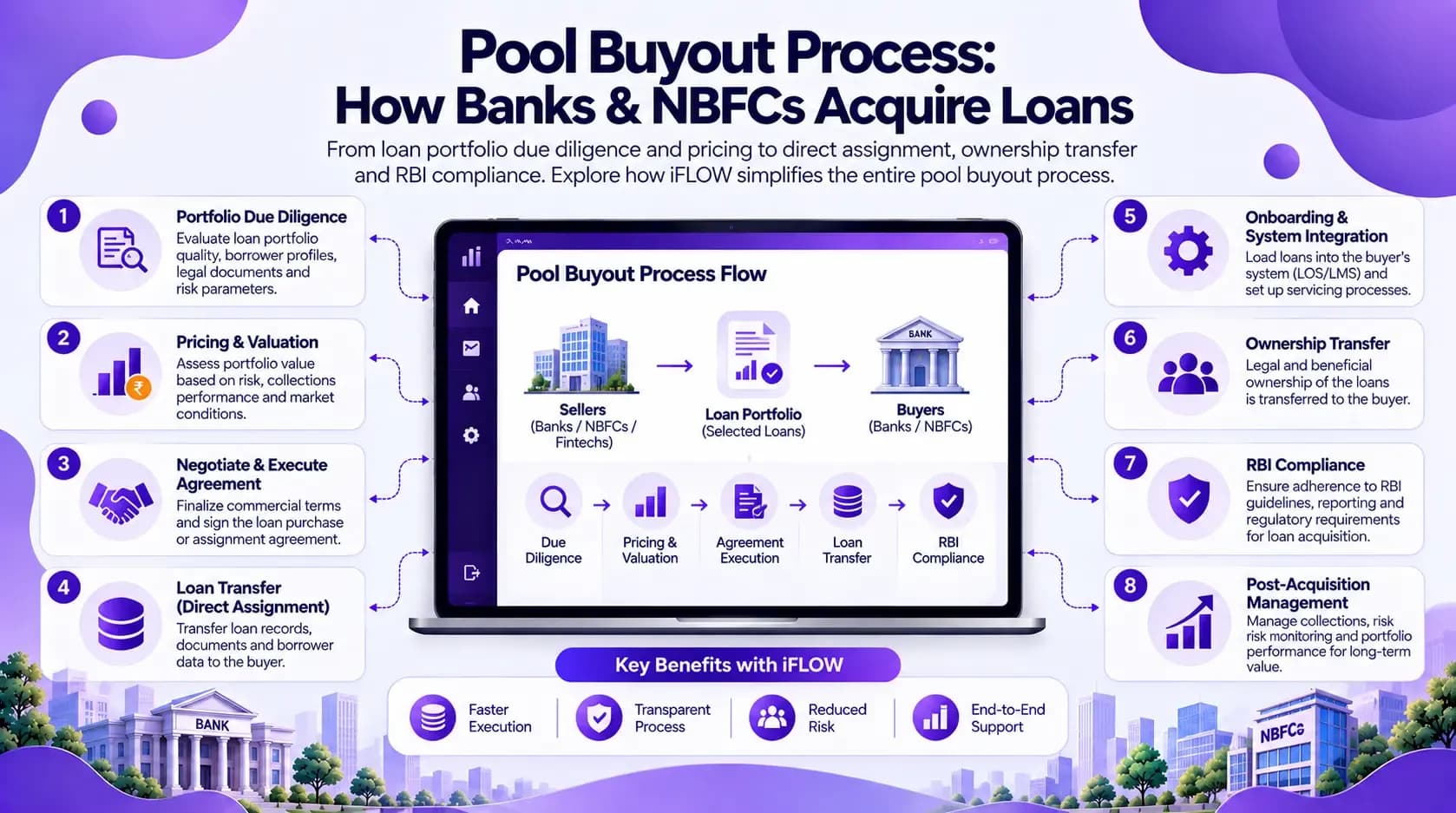
Pool Buyout Process: How Banks and NBFCs Evaluate and Acquire Loan Portfolios
A pool buyout process involves a bank purchasing a group of loans from an NBFC and taking over the right to receive repayments from borrowers. Before the deal goes through, both parties review the loans, assess their quality, agree on a price and complete the necessary paperwork. The transaction must comply with applicable RBI guidelines. Even after the sale, the NBFC may continue collecting repayments on the bank’s behalf, depending on the agreed terms.
Introduction
The pool buyout process begins when a bank considers buying a set of loans that an NBFC has already given to its customers. Rather than finding new borrowers, the bank takes over an existing loan portfolio. For the NBFC, selling these loans can bring in funds that can be used for fresh lending. However, the bank needs to be sure of what it is buying before agreeing to the deal.
That is why pool buyout due diligence matters. The bank checks borrower details, outstanding balances and repayment records to see how the loans are performing. Both sides then work out the purchase price, agree on the terms and complete the paperwork. In some transactions, a direct assignment of the loan portfolio is used to transfer the loans from the NBFC to the bank.
There are several steps involved, and not every deal goes through smoothly. Missing records, repayment concerns or disagreements over pricing can slow things down. This article looks at how banks review loan portfolios, how the loan portfolio acquisition process works, and what happens during the pool buyout asset transfer, including the transfer of ownership.
What Is a Pool Buyout in Banking?
A pool buyout happens when a bank purchases a group of loans from an NBFC. For example, the deal could include 1,500 two-wheeler loans or 600 home loans. The bank pays the agreed price and receives the right to future repayments. In a direct assignment, the bank takes over the loans, while the NBFC may continue collecting EMIs on the bank’s behalf.
Quick Overview of the Pool Buyout Process
- Select the loan pool: The NBFC identifies the loans it plans to sell to the bank.
- Check the loan records: The bank reviews borrower details, repayment history and sample loan files.
- Set the purchase price: Both parties agree on the price, expected returns and other financial terms.
- Complete the paperwork: The bank and NBFC sign the assignment deed and agree on loan servicing arrangements.
- Make the payment: The bank pays the agreed amount, and the loan rights are transferred as per the deal.
- Manage repayments: The NBFC may continue collecting EMIs and sharing repayment updates with the bank.
How the Pool Buyout Process Works: Six Key Steps
Every pool buyout process starts with one question from the buyer’s credit team: would we have underwritten these loans ourselves?
- Eligibility screening. A regular direct assignment covers standard loans, meaning none in default. They must also have cleared the minimum holding period.
- Data tape analysis. The buyer checks loan-level data such as tenor, ticket size, LTV, DPD history, borrower profile and geography. A pool with 40% of loans in one district or one dealer channel raises red flags quickly.
- Sample file audit. Auditors pull a sample and verify agreements, KYC, security creation, insurance and proof of disbursement. Gaps found during pool buyout due diligence are far cheaper to fix now than to litigate later.
- Originator assessment. The bank studies the NBFC’s underwriting policy, collection efficiency and record on earlier pools. Since the NBFC keeps servicing, its financial health matters as much as the loans.
- Agree on the price: The bank estimates how much it can earn from the loans after accounting for possible defaults, early repayments and expected returns. It also checks the NBFC’s estimates before deciding on the final price. Since the seller cannot simply cover the buyer’s credit losses, the bank must factor the risk into its decision.
- Get credit approval: The bank’s credit committee reviews the loan pool, due diligence findings and internal lending limits before approving the deal.
The Loan Portfolio Acquisition Process: From Pricing to Closing
Once the bank and NBFC settle on a price, the next step is to put the deal in writing. The deed of assignment lists the loans being sold, while the servicing agreement explains who will collect EMIs and how the money and repayment records will reach the bank. Depending on the deal, collections may go through a separate account.
The bank must make sure the pool buyout asset transfer follows RBI’s rules before the deal is finalised. Once the loans are sold, the bank takes on the agreed share of the risks instead of expecting the NBFC to cover any losses. The NBFC may also need to keep a portion of the loans and hold them for a set period before selling. These requirements depend on the type of deal, so both parties should check the relevant RBI guidelines before moving ahead.
Transfer of Ownership in Pool Buyout: Who Owns What?
Once the deal is complete, the bank gets the agreed share of loan repayments and takes on the related credit risk. The NBFC may still handle EMI collection, send the money to the bank and provide regular updates on repayments.
In a transfer of ownership in pool buyout, the NBFC may need to take a loan back if it provided incorrect details or the loan failed to meet the conditions agreed with the bank. But if a borrower stops paying EMIs, that alone doesn't mean the NBFC has to buy the loan back. The bank and NBFC agree on the way interest will be shared. The NBFC may get paid for collecting EMIs and keeping track of repayments. Depending on the agreement between the two, the tax treatment will differ. The process is usually the same for borrowers. Following the bank's purchase of their loan portfolio, the borrowers continue to pay their EMIs according to the original loan terms.
Conclusion
A pool buyout is a way for banks to acquire loans that an NBFC has already given to its customers. For NBFCs, it helps bring in funds for further lending, while banks get access to an existing set of borrowers.
Before finalising the deal, the bank and NBFC need to review the loans, settle on a price and decide who will handle EMI collections. They also need to complete the paperwork and follow the applicable RBI rules. Once everything is in place, the deal can move forward, while borrowers generally continue paying their EMIs as before.
FAQs
1. What is the buyout process?
The buyout process involves transferring an existing financial obligation or asset from one party to another for an agreed price. In lending, a pool buyout occurs when one eligible lender acquires a portfolio of loans from another after reviewing loan data, borrower records, repayment history, eligibility, valuation and transfer documentation.
2. What are the disadvantages of a buyout?
The main disadvantages of a pool buyout are the risk of acquiring loans with weak repayment performance, incomplete documentation, inaccurate data or lower-than-expected returns. The buyer also needs to manage valuation, regulatory compliance, portfolio integration and ongoing collections. If due diligence misses material issues, the acquired portfolio may generate higher losses or operational costs than expected.
3. What is a notice period buyout and how does it work?
A notice period buyout is an employment arrangement in which an employee or employer pays an agreed amount instead of serving some or all of the required notice period. The process depends on the employment contract and company policy, including who is permitted to initiate the buyout and how the payment is calculated. This employment-related meaning is different from a loan pool buyout in banking.
4. How does the pool buyout process work in India?
In India, a pool buyout generally involves an eligible lender acquiring a portfolio of loans from another lender through a permitted transfer arrangement. The buyer reviews loan eligibility, repayment records, borrower information, documentation and portfolio valuation before approval and transfer. The transaction must comply with the applicable RBI Transfer and Distribution of Credit Risk Directions and other relevant requirements, including minimum holding periods where applicable.
5. What is the difference between a pool buyout and co-lending?
A pool buyout involves one lender acquiring an existing portfolio of loans from another lender, whereas co-lending involves two or more lenders financing borrowers under an agreed lending arrangement. In a pool buyout, the transaction transfers eligible existing loan exposures; in co-lending, lenders participate in financing under the applicable arrangement. Their funding structures, responsibilities and risk allocation differ according to the transaction terms and regulatory framework.